


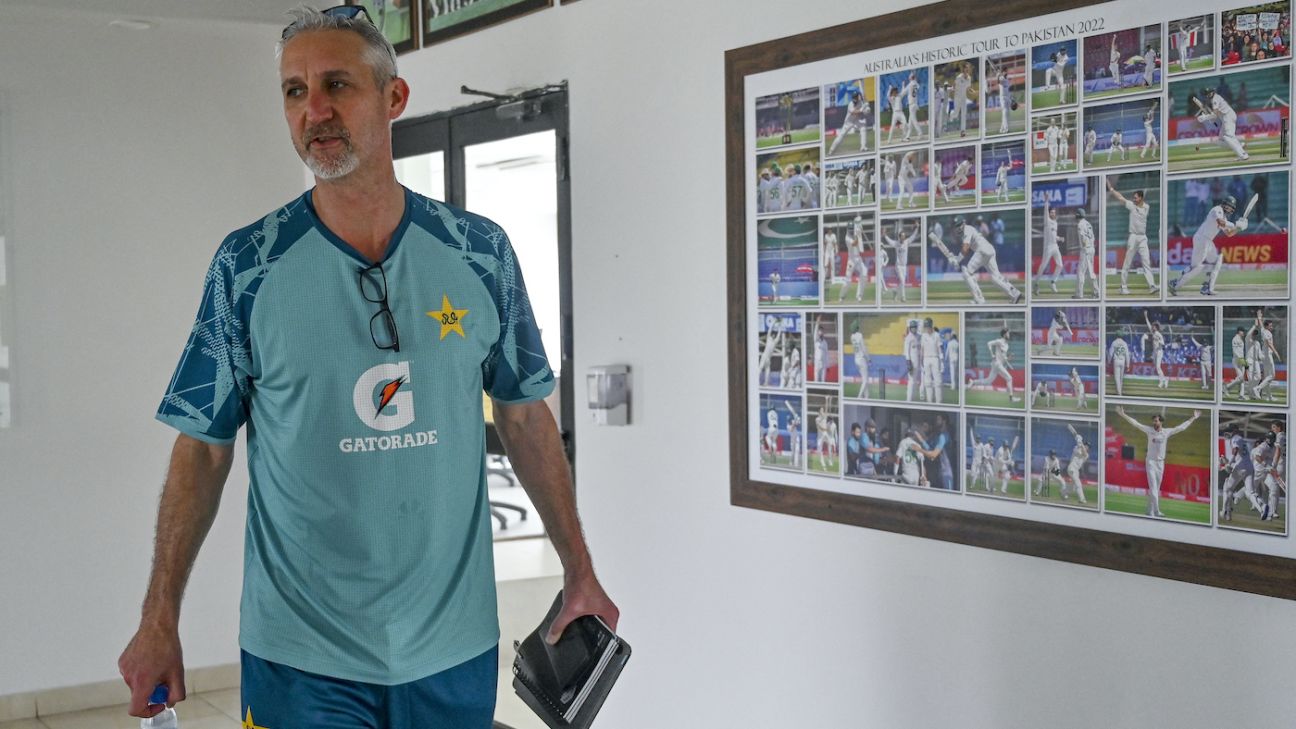
Gillespie explained, “There were definitely challenges. I went into the job with open eyes, I want to make that really clear. I knew that, you know, Pakistan went through a lot of coaches in a very short period of time.” Is.” ABC Sport. “I think the straw that broke the camel’s back was that as a head coach, you like to have clear communication with your employer. I completely agree with the decision not to hire a high-performance coach.” Was surprised.”
“Tim Nielsen was told his services were no longer needed and I have had no conversation with anyone about that,” Gillespie said. “And I thought after a lot of other things that happened over the last few months, maybe this was the moment where I thought, ‘Okay, I’m not really sure whether they really want me to do this job or not.'”
Gillespie’s disappointment was compounded by the fact that the feedback he was given regarding Nielsen and the team’s performance was positive.
“I developed a really close relationship with the Test captain Shan Masood and felt that we were definitely going in the right direction and things were going really well,” he said. “Whatever feedback I got or the feedback the PCB got was how effective he was, you know, Tim was also in his role and the players were getting a lot out of him.”
After losing the first match by an innings and 47 runs, Gillespie led Pakistan to a 2–1 win against England in October. However, after the defeat in the first Test, he was informed that a new selection panel would be brought in, and he would not be a part of it.
“I thought I was basically catching and that was it on the morning of the game,” he said. “For example, you want to be able to have clear communication with all stakeholders, including the selectors, the head coach before the game or at least the day before the game, knowing what the team is up to.



Leave a Reply