


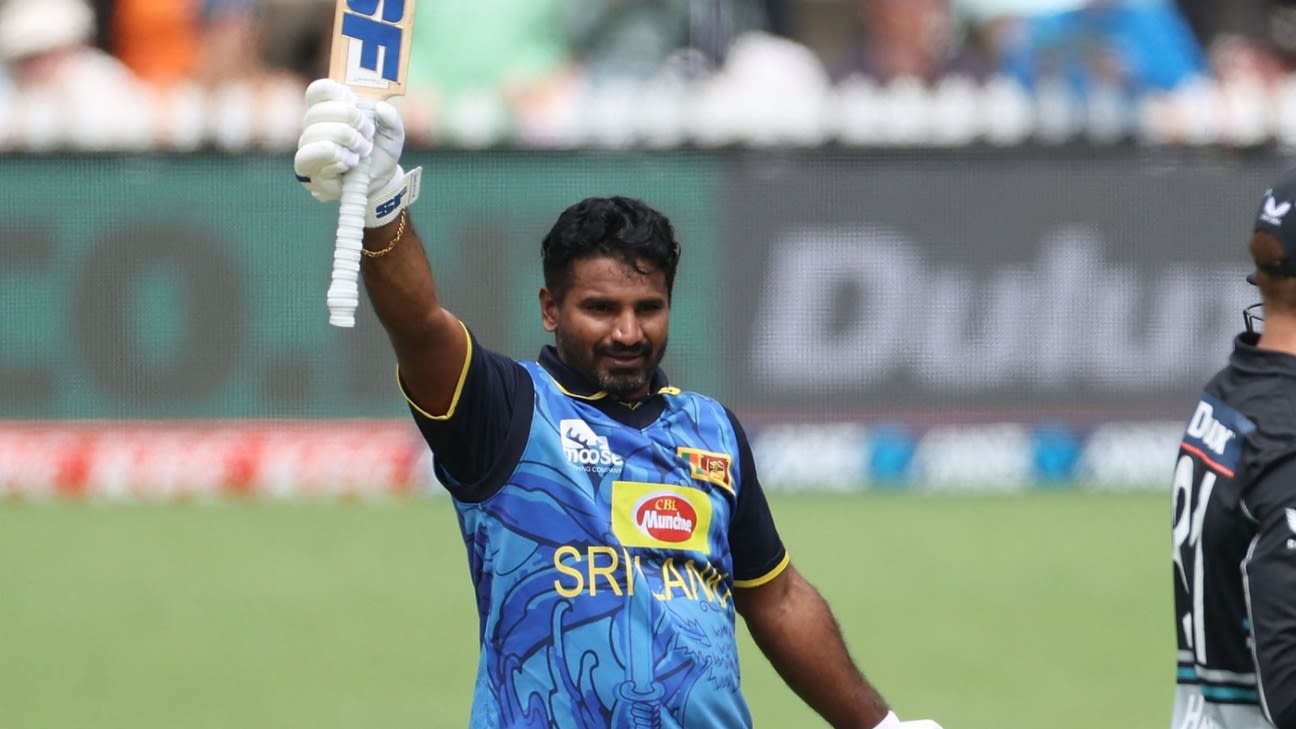
Sri Lanka Defeated by 218 for 5 wickets (Perera 101, Asalanka 46) new zealand 211 for 7 wickets (Ravindra 69, Aslanka 3-50, Hasaranga 2-38) by 7 runs
In the end Sri Lanka did a lot. It’s not something you would expect to say about a team that scored 218 runs in their first innings, but it shows how well New Zealand had prepared to chase their target for most of the innings.
Sri Lanka then thought they had done enough by taking a few wickets in the death overs, before Zachary Foulkes’ final over fireworks caused another scare. But despite the nervousness, Sri Lanka secured a consolation win by seven runs – their first win in New Zealand since 2006.
Asalanka also played an important role – despite the treatment meted out by Mitchell – with his 46 runs with the bat taking three wickets in derailing New Zealand’s well-planned chase. He also took a brilliant catch at extra cover and performed brilliantly. However no one was looking ahead of Perera for the Player of the Match award.
Jacob Duffy, who had been a thorn in Sri Lanka’s side throughout the series, took just one wicket this time, although his economy rate of 7.50 was still the best of any bowler who bowled at least two overs in the game. He was adjudged the best player of the series.
Initial setbacks in SL and NZ trade
The up-and-down nature of the game was evident from the start. Sri Lanka lost three of their top four inside the first 10 overs and three of their openers inside the powerplay, but they did not let it slow them down.
Kusal Mendis scored 22 off 16, Pathum Nissanka scored 14 off 12 and Avishka Fernando scored 17 off 12, as Sri Lanka maintained a steady rate of around eight per over.
Despite the early wickets, it could have been even better had New Zealand mistimed a reverse sweep off Perera when they were on just 15.
Despite taking two excellent catches to dismiss both Nissanka and Mendis, this was a chance he would probably look back and regret.
Perera and Sri Lanka turn on the afterburner
Despite losing three wickets, Sri Lanka’s score of 85 after the first 10 overs was their best score at the half of an innings in the entire series. But the next 10 overs will easily hide this figure.
Led by the combative Perera, and aided by some short boundaries off Nelson, Sri Lanka conceded 133 runs in the last 10 overs – and it could have been considerably more had it not been for two excellent overs in the death from Mitchell and Duffy.
Those two overs went for six runs each, but Sri Lanka still finished on a mammoth total of 218 runs, which reflected the damage done in the overs before that – particularly the disastrous four-over period of 14-18 overs. In which 75 runs were scored. Much of this was due to Perera, whose century came at a strike rate above 200 and included 13 fours and four sixes.
Although he initially targeted boundaries behind square with a list of sweeps, switch hits and outright slogs, by the end his innings was a true 360 exhibition – a brilliant six over cover, bringing home his century emphatically. Reached.
He was accompanied by an equally combative Asalanka, who scored 46 runs from 24 balls during a 100-run partnership in just 45 balls for the fourth wicket.
Well prepared New Zealand came out firing
No matter what the match situation, you can always count on New Zealand to come up with an effective plan, and their chase in Nelson was a prime example.
Most teams would have been nervous while chasing a target of 219, but from the very first over New Zealand set the tone as Tim Robinson and Rachin Ravindra both hit a boundary each off Chamidu Wickremesinghe.
Nuwan Thushara then conceded five runs, but New Zealand compensated by dismissing Binura Fernando, Sri Lanka’s most effective seamer in this series, conceding 18 runs in his opening over.
63 runs were scored inside the powerplay, but even after this the attack continued. By half time New Zealand had scored 108 runs and still had eight wickets left.
Aslanka the unlikely hero
With Thushara and Binura saved for the death overs and Theekshana having the day off, Asalanka faced a conundrum in the middle overs. Was he going to trust Hare Wickremesinghe to single-handedly handle the fifth bowler quota, or would he do some bowling himself?
Ultimately they chose the latter option and this may have turned the game in Sri Lanka’s favour. The Lankan captain dismissed Mark Chapman in his first over, followed by Glenn Phillips in his second. But it was his third wicket that caught the big fish as it edged past Ravindra and dismissed the New Zealand opener for 69 off 39 balls.
Perhaps Aslanka had overestimated his abilities to get himself out, and he was duly punished by Mitchell. But their successes meant that New Zealand would be forced to post heavy scores in the death overs against Sri Lanka’s frontline bowlers.
New Zealand can’t stop landing
Despite Aslanka’s strike, Mitchell’s brilliant striking brought the equation down from 30 to 51 with six wickets remaining.
At that time it seemed that the hard work was done, but New Zealand could not make the landing. Hasaranga’s double wicket in the 16th over served to reverse the momentum that had swung New Zealand’s way through Mitchell’s onslaught. And then when Mitchell fell an over after trying to defeat Thushara, the writing seemed to be on the wall.
Although Foulkes ensured that Sri Lanka remained in contention for the win with some powerful strikes in the death overs, the visitors were able to hold on.

Leave a Reply